



Microsoft invests US$17.5 billion in India to drive AI diffusion at population scale

Microsoft has announced a significant US$17.5 billion investment in India, aimed at accelerating artificial intelligence (AI) adoption and diffusion across the nation at an unprecedented population scale. This strategic commitment underscores India’s critical role in the global AI landscape and Microsoft’s vision for pervasive AI integration. The investment targets infrastructure expansion, skilling initiatives, and fostering a robust AI innovation ecosystem throughout the country.

Background and Context

India has emerged as a pivotal market for technological advancement, driven by its vast digital public infrastructure and a rapidly expanding tech-savvy population. The nation’s “Digital India” initiative, launched in 2015, has laid a strong foundation for digital transformation, making it fertile ground for advanced technologies like AI. Microsoft has maintained a substantial presence in India for decades, establishing multiple development centers, data centers, and engaging in various skilling and partnership programs.

The global race for AI dominance has intensified, with nations recognizing AI’s potential to redefine economies and societies. India’s government has actively promoted AI adoption through its National Strategy for Artificial Intelligence, focusing on inclusive growth and leveraging AI for social good. This policy environment, coupled with a large talent pool and a vibrant startup ecosystem, positions India as a strategic hub for AI development and deployment. Previous investments by global tech giants in India’s digital infrastructure and talent development have further cemented this trajectory, setting the stage for Microsoft’s latest, expansive commitment. The evolution of cloud computing and the increasing accessibility of AI tools have made large-scale AI diffusion a tangible goal, promising to unlock new levels of productivity and innovation across diverse sectors.

Key Developments and Investment Specifics

The US$17.5 billion investment represents Microsoft’s largest single country investment outside of the United States, signifying a profound commitment to India’s AI future. This capital injection is multifaceted, focusing on several critical areas to ensure comprehensive AI diffusion:

Cloud Infrastructure Expansion

A substantial portion of the investment is earmarked for expanding Microsoft’s cloud computing infrastructure within India. This includes establishing new data centers and augmenting existing Azure regions. The goal is to provide robust, low-latency, and scalable cloud services essential for deploying AI models and applications at population scale. This infrastructure will support the processing power and storage requirements of advanced AI workloads, making AI accessible to a wider array of businesses and public services.

AI Skilling Initiatives

Microsoft plans to launch extensive AI skilling programs targeting millions of individuals across various demographics. These initiatives will focus on upskilling and reskilling the workforce in AI-related competencies, including data science, machine learning, AI ethics, and prompt engineering. The programs aim to empower students, developers, IT professionals, and even government employees with the necessary skills to leverage AI effectively. Partnerships with educational institutions, government bodies, and industry associations will be crucial for the widespread implementation of these skilling efforts.

Fostering AI Innovation

The investment will also fuel AI innovation by supporting startups, research institutions, and academic collaborations. Microsoft intends to provide grants, mentorship, and access to its cutting-edge AI platforms and tools for Indian innovators. This includes promoting responsible AI development, ensuring that AI solutions are developed ethically and address societal challenges equitably. Focus areas for innovation include AI applications in healthcare, agriculture, education, and public administration, aligning with India’s national priorities.

Strategic Partnerships

Microsoft will deepen its engagements with the Indian government, local businesses, and academic institutions. These partnerships are designed to co-create AI solutions tailored to India’s unique needs, facilitate policy development that supports AI adoption, and ensure the seamless integration of AI into various sectors. The investment is structured to not only provide technology but also to build a sustainable ecosystem where AI can thrive organically.

Impact on India

This massive investment is poised to generate far-reaching impacts across India’s economy, society, and technological landscape.


Economic Transformation

The investment is expected to create a significant number of direct and indirect jobs across the technology sector, infrastructure development, and related industries. It will boost India’s GDP by accelerating digital transformation and enhancing productivity across various sectors. The presence of advanced AI infrastructure and talent is also likely to attract further foreign direct investment, solidifying India’s position as a global investment destination. Small and Medium Enterprises (SMEs) will gain access to sophisticated AI tools, enabling them to innovate, improve efficiency, and compete more effectively in the global market.

Societal Advancement

At an individual level, the widespread diffusion of AI will lead to improved access to AI-powered services. In healthcare, this could mean more accurate diagnostics, personalized treatment plans, and enhanced remote care. In education, AI can deliver personalized learning experiences and make quality education more accessible. For government services, AI can streamline processes, improve transparency, and enable data-driven governance for initiatives like smart cities and public welfare programs. The skilling initiatives will equip millions with future-ready skills, improving employability and fostering digital literacy across the population.

Technological Leapfrogging

The investment will significantly accelerate AI adoption and development within India. It will enable the creation of localized AI solutions that address specific Indian challenges, from agricultural productivity to disaster management. By strengthening India’s technological infrastructure and talent base, the country is set to reinforce its status as a global technology hub, capable of not only consuming but also producing cutting-edge AI innovations. This will foster a vibrant ecosystem for research and development, pushing the boundaries of AI capabilities.

Sector-Specific Benefits

* Agriculture: AI can revolutionize farming through precision agriculture, predictive analytics for crop yields, pest detection, and efficient water management, directly benefiting millions of farmers.
* Healthcare: Beyond diagnostics, AI can aid in drug discovery, personalized medicine, and managing public health crises, making healthcare more accessible and effective.
* Education: AI-powered tools can offer adaptive learning platforms, automated assessment, and career guidance, tailoring education to individual needs.
* Finance: AI can enhance fraud detection, personalize financial services, and improve risk management for banks and financial institutions.

What Next: Expected Milestones and Future Outlook

The US$17.5 billion investment marks the beginning of a multi-year strategic engagement. Microsoft is expected to roll out its infrastructure expansion in phases, with new data center regions or capacity upgrades becoming operational progressively. The skilling programs will commence with pilot projects, scaling up rapidly to reach the targeted millions of individuals over the next few years.

Key milestones will include the launch of specific AI accelerators for startups, the establishment of AI research labs in collaboration with Indian universities, and the deployment of AI-powered solutions in critical public sectors. Microsoft will likely track measurable outcomes, such as the number of individuals trained, the volume of AI solutions deployed, and the economic impact generated by these initiatives.

While the potential is immense, challenges remain. These include ensuring equitable access to AI technologies across urban and rural divides, addressing data privacy concerns, mitigating algorithmic bias, and continuously adapting to the evolving regulatory landscape. Microsoft’s long-term vision positions India as a model for how AI can be diffused at a population scale in emerging economies, contributing significantly to global AI advancements while fostering inclusive growth within the nation. This commitment signals a sustained partnership aimed at making India a global leader in responsible and impactful AI innovation.


New clashes break out between Pakistan and Taliban

Fresh clashes have erupted along the porous border between Pakistan and Afghanistan, escalating tensions between Islamabad and the Afghan Taliban administration. These recent confrontations, involving cross-border shelling and militant incursions, have resulted in casualties on both sides and intensified a diplomatic standoff over counter-terrorism efforts. The violence primarily targets Pakistan’s Khyber Pakhtunkhwa and Balochistan provinces, where Pakistani security forces are battling militants allegedly operating from Afghan soil.

Background: A Fractured History and Rising Militancy

The relationship between Pakistan and Afghanistan has long been complex, marked by historical disputes and shifting allegiances. A central point of contention is the Durand Line, the 2,640-kilometer border established in 1893, which Afghanistan has never officially recognized. This unresolved territorial issue fuels mistrust and complicates border management, allowing for the free movement of various groups across the tribal belt.

The Rise of the Tehrik-i-Taliban Pakistan (TTP)

The Tehrik-i-Taliban Pakistan (TTP), also known as the Pakistani Taliban, emerged in 2007 as an umbrella organization of various militant groups. While ideologically aligned with the Afghan Taliban, the TTP operates independently with the primary goal of overthrowing the Pakistani state. Following major Pakistani military operations like Zarb-e-Azb in 2014, many TTP fighters and commanders sought refuge in Afghanistan, particularly in areas bordering Pakistan.

Afghan Taliban’s Return and Pakistan’s Expectations

When the Afghan Taliban seized control of Kabul in August 2021, Pakistan initially held hopes that the new administration would curb the TTP’s activities. Islamabad had historically supported elements of the Afghan Taliban, expecting reciprocal cooperation on security matters. However, these expectations largely went unfulfilled. Instead, the TTP found renewed sanctuary and operational space within Afghanistan, leading to a significant resurgence of attacks inside Pakistan.

Breakdown of Peace Efforts

In late 2021 and early 2022, Pakistan attempted to engage the TTP in peace talks, reportedly facilitated by the Afghan Taliban. These negotiations, however, ultimately collapsed by late 2022, with the TTP refusing to lay down arms and adhering to its demands for imposing Sharia law in Pakistan. Following the breakdown, the TTP intensified its campaign, leading to a sharp increase in militant attacks against Pakistani security forces and civilians across the country, particularly in Khyber Pakhtunkhwa and Balochistan.

Key Developments: Escalating Border Confrontations

The past months have witnessed a marked escalation in cross-border violence and rhetoric. Pakistani authorities consistently accuse the Afghan Taliban of failing to dismantle TTP safe havens and allowing its fighters to launch attacks from Afghan territory. The Afghan Taliban, in turn, denies these allegations, asserting that Pakistan should address its internal security challenges independently.

Recent Cross-Border Incidents

In recent weeks and months, several significant clashes have been reported. Pakistani security forces have engaged in intense firefights with militants attempting to infiltrate from Afghanistan into districts such as Bajaur, North Waziristan, and Kurram in Khyber Pakhtunkhwa. These incursions often target border posts and security patrols. Simultaneously, Pakistan has reported instances of indiscriminate shelling originating from Afghan soil, causing civilian casualties and property damage in border villages.

Pakistan’s Counter-Terrorism Operations

In response to the surge in attacks, Pakistan has intensified its counter-terrorism operations within its borders. The Pakistani military has conducted intelligence-based operations targeting militant hideouts and infrastructure. Islamabad has repeatedly warned the Afghan Taliban that it reserves the right to take action against militant groups threatening its security, even if it means crossing into Afghan territory. Such warnings have been met with strong condemnation from the Afghan Taliban, which views any cross-border action as a violation of its sovereignty.

Diplomatic Standoff

The diplomatic channels between the two nations have become increasingly strained. Pakistan has repeatedly summoned Afghan diplomats in Islamabad to lodge formal protests and issue demarches regarding the TTP’s activities. Conversely, the Afghan Taliban has accused Pakistan of airspace violations and has warned against any unilateral military actions. This diplomatic deadlock underscores the deep mistrust and divergent priorities between the two neighboring states.

Impact: A Region on Edge

The escalating clashes and diplomatic friction carry significant repercussions for both Pakistan and Afghanistan, affecting security, humanitarian conditions, and economic stability across the region.

Security Deterioration

The primary impact is a severe deterioration of the security situation in Pakistan’s border regions. Provinces like Khyber Pakhtunkhwa and Balochistan have experienced a sharp rise in militant attacks, including suicide bombings, ambushes, and targeted killings. This has led to increased casualties among Pakistani security forces and civilians, fostering an environment of fear and instability. The violence also strains Pakistan’s military resources, diverting attention and funds from other critical areas.

Humanitarian Concerns

Cross-border shelling and military operations often lead to the displacement of local populations living near the border. Villages are evacuated, and residents are forced to seek refuge elsewhere, disrupting their livelihoods and access to essential services. Civilian casualties, including women and children, are an unfortunate consequence of these clashes. The closure of key border crossings, even temporarily, further exacerbates humanitarian challenges by impeding the movement of people and essential goods.

Economic Disruptions

Trade between Pakistan and Afghanistan, a vital economic lifeline for both landlocked Afghanistan and Pakistan’s border communities, has been severely impacted. Major border crossings like Torkham and Chaman frequently face closures or disruptions due to security concerns. This impedes the flow of goods, including fresh produce, construction materials, and humanitarian aid, leading to significant economic losses for traders and transporters on both sides. Pakistan’s overall economic stability is also indirectly affected by increased defense spending and a perception of heightened regional instability, which can deter foreign investment.

Strained Bilateral Relations

The ongoing clashes have pushed Pakistan-Afghanistan relations to a critical low point. The mutual accusations and lack of trust hinder cooperation on other vital issues, such as refugee management, regional connectivity, and counter-narcotics efforts. This diplomatic freeze complicates any potential for a peaceful resolution to the TTP issue and risks further isolating the Afghan Taliban administration on the international stage.

What Next: Pathways and Pitfalls

The trajectory of Pakistan-Afghanistan relations and the security situation along their shared border remains uncertain, with several potential scenarios unfolding in the coming months.

Continued Low-Level Conflict

The most likely immediate future involves a continuation of the current pattern: intermittent cross-border clashes, targeted counter-terrorism operations by Pakistan, and persistent TTP attacks. The Afghan Taliban is unlikely to undertake a full-scale operation against the TTP, given ideological ties and internal political dynamics. Pakistan, facing internal pressure, will likely maintain its robust security posture and diplomatic pressure.

Potential for Escalation

A significant risk remains for further escalation. Should the TTP launch a particularly devastating attack within Pakistan, or if Pakistani forces conduct a more substantial cross-border operation, the situation could spiral into a more direct military confrontation. Such a scenario would have severe regional implications, potentially drawing in other actors and further destabilizing an already fragile region.

Diplomatic Efforts and External Mediation

While bilateral trust is at a low ebb, diplomatic channels, however strained, will likely remain open. Pakistan will continue to press the Afghan Taliban through international forums and direct engagement. There is a possibility that regional powers like China or Qatar, which have some influence with the Afghan Taliban, might play a mediating role to de-escalate tensions and facilitate dialogue on counter-terrorism cooperation. However, the effectiveness of such mediation depends heavily on the political will of both Islamabad and Kabul.

Pakistan’s Evolving Strategy

Pakistan is expected to continue strengthening its border security infrastructure, including fencing and surveillance. Concurrently, it will likely pursue a multi-pronged strategy combining targeted military operations against TTP elements within its borders, sustained diplomatic pressure on the Afghan Taliban, and efforts to garner international support for its stance on combating cross-border terrorism. The focus will remain on compelling the Afghan Taliban to take concrete and verifiable action against the TTP.

The coming months will be crucial in determining whether the two nations can find a way to manage their shared security challenges or if the current cycle of violence and mistrust will deepen, with dire consequences for regional stability.

DRDO’s High-Speed Rocket-Sled Test is a Game-Changer for Fighter Jet Safety

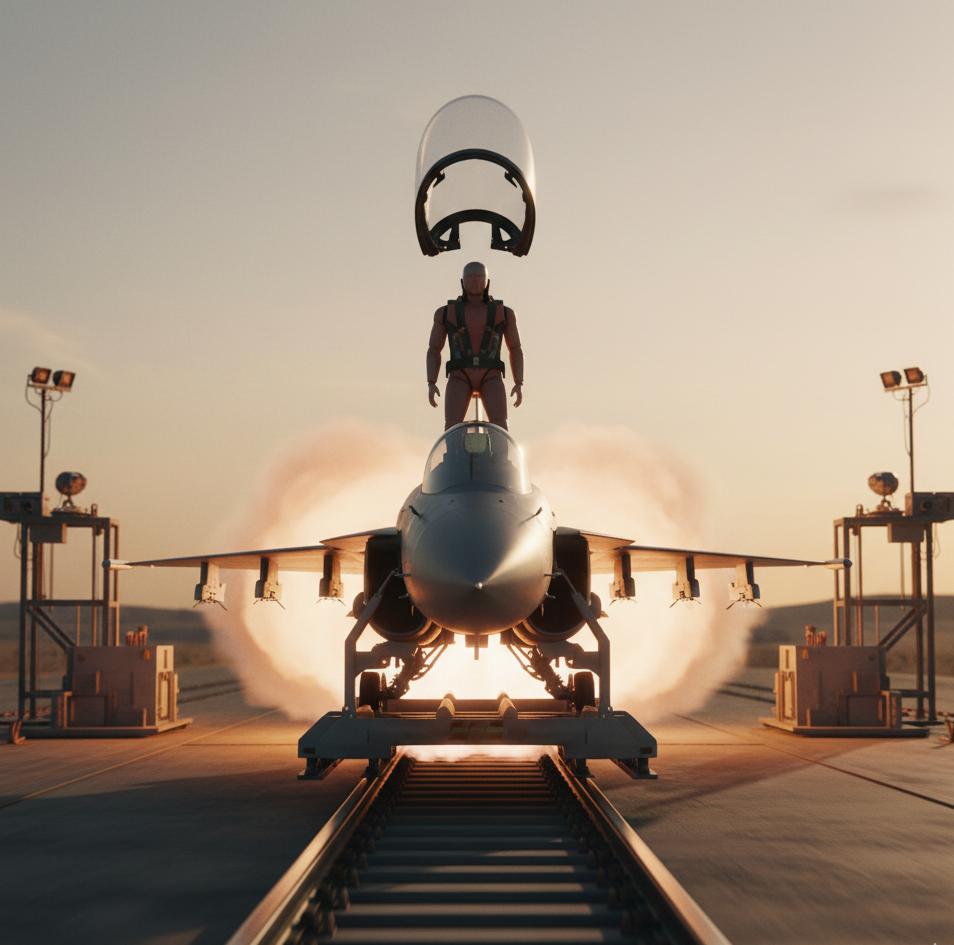
In a massive leap towards defense self-reliance (Aatmanirbharta), the Defence Research and Development Organisation (DRDO) has successfully conducted a complex high-speed rocket-sled test of a fighter aircraft escape system. Defence Minister Rajnath Singh hailed the achievement as a “self-reliance milestone,” placing India in an elite club of nations capable of performing such advanced dynamic safety evaluations.

This isn’t just a technical win; it’s a strategic guarantee that India’s indigenous fighter pilots will have access to world-class safety and escape technology, completely designed and validated in India.

🚀 What Was Tested? The Pilot’s Last Line of Defence

The test focused on the crew escape system—the pilot’s lifeline in a catastrophic airborne emergency. This system is not just the ejection seat itself, but a highly synchronized chain of events that must occur perfectly within milliseconds.

The DRDO test, conducted in collaboration with the Aeronautical Development Agency (ADA) and Hindustan Aeronautics Limited (HAL), validated three crucial elements under extreme high-speed conditions:

  1. Canopy Severance: The mechanism that blasts the fighter jet’s canopy clear of the pilot’s path.
  2. Ejection Sequencing: The precise timing of the rocket firing to propel the seat and pilot (represented by an instrumented dummy) safely away from the fast-moving aircraft.
  3. Aircrew Recovery: The full sequence leading to the deployment of the parachute for a safe descent.

🚄 Why a “Rocket-Sled” is Critical: The Dynamic Advantage

The test took place at the Rail Track Rocket Sled (RTRS) facility of the Terminal Ballistics Research Laboratory (TBRL) in Chandigarh. Unlike static tests (like the common ‘Zero-Zero’ test), which simulate ejection from a stationary aircraft, the rocket-sled test simulates real-world flight dynamics.

For this trial, a dual-sled system carrying the forebody of the LCA Tejas was propelled to a precisely controlled 800 km/h by firing multiple solid propellant rocket motors.

  • Simulating Reality: A real-world ejection, especially at high speeds, involves massive aerodynamic loads and forces. The RTRS facility allows engineers to replicate these conditions on the ground with precise instrumentation.
  • Data Accuracy: An instrumented Anthropomorphic Test Dummy (ATD) recorded the critical loads, moments, and accelerations that a pilot would experience, ensuring the system is safe and effective under extreme stress.

This complex, dynamic validation capability is what separates India from most other nations, underscoring the sophistication of the TBRL facility.

🇮🇳 A Giant Leap for ‘Aatmanirbhar Bharat’ in Defence

This successful high-speed dynamic test is a towering achievement for India’s self-reliance mandate for several reasons:

  • Indigenous Confidence: It validates India’s ability to design, develop, and rigorously test critical aviation safety components in-house, significantly reducing dependence on expensive foreign suppliers.
  • Tailored Solutions: It allows the escape system to be perfectly integrated and optimized for India’s indigenous fighter fleet, including the LCA Tejas and future combat platforms.
  • Certifications: The successful test was witnessed by officials from the Indian Air Force (IAF), the Institute of Aerospace Medicine, and certification agencies, paving the way for the system’s eventual operational deployment.

Defence Minister Rajnath Singh’s praise confirms the government’s recognition of the DRDO, IAF, ADA, HAL, and industry partners who made this technological marvel possible. It reinforces the message that India is committed to becoming a self-sufficient superpower in aerospace technology.

⭐ What This Means Next

The successful rocket-sled test marks a crucial qualification stage for the crew escape system. The data gathered will be used for further refinements and integration into India’s indigenous fighter jets.

For the Indian defence industry, this is proof that local innovation can meet the highest global standards for safety and performance. This milestone is not just about a pilot’s escape; it’s about India’s escape from reliance on foreign defense technology.

Sanchar Saathi App is Now Mandatory on Every Smartphone Sold in India

Hey, digital citizens! Have you ever worried about SIM card fraud, identity theft, or what happens when your phone gets lost? If you live in India and are planning to buy a new smartphone, the government is making sure you have a powerful new tool right out of the box to fight back.

India’s Department of Telecommunications (DoT) has just mandated that the Sanchar Saathi cyber safety application must be pre-installed on all new smartphones sold across the country. This isn’t just an update; it’s a massive shift in how India approaches mobile security, impacting millions of users and every major device manufacturer.

But what exactly is Sanchar Saathi, and how does this DoT mandate affect your life and your data? Let’s dive in.

🛡️ The Battleground: Why India Needs Mandatory Smartphone Safety

India’s digital revolution has been incredible—more people are online now than ever before. But this rapid growth has a dark side: a corresponding surge in mobile fraud and cybercrime.

From sophisticated SIM swapping scams to financial fraud and device theft, our trust in digital services is constantly being tested. The government realized that waiting for people to download protection wasn’t enough; they needed an embedded, immediate solution to strengthen cyber security in India.

🚀 From Website to Weapon: The Genesis of Sanchar Saathi

The Sanchar Saathi initiative started as a web portal back in May 2023. It was a huge success, leading to the recovery of thousands of stolen devices and shutting down fraudulent connections. Its effectiveness was so undeniable that the DoT decided to take the next logical step: embed it directly into the user experience.

The mandatory pre-installed app integrates and enhances several key tools designed to protect you:

Core Protection Features You Need to Know:

  • Lost/Stolen Mobile Blocking (CEIR): If your phone vanishes, you can instantly report it, block its unique IMEI number, and track its status directly through the app. This drastically increases the chance of recovery and prevents misuse.
  • SIM Connection Verification (TAFCOP): Scammers often link unauthorized SIMs to your identity. The app lets you easily see every mobile connection registered under your name, giving you the power to report fraudulent SIM cards immediately.
  • Fraud Reporting (Chakshu): Get a suspicious call, SMS, or WhatsApp message? You now have a simplified, direct mechanism in the app to report these communications, feeding real-time intelligence to government agencies fighting scam networks.
  • Proactive Threat Alerts: Expect real-time notifications about emerging cyber threats, phishing attempts, and the latest scam tactics, turning the app into a vital educational resource for digital security.

📲 The Impact: Who Wins and Who Needs to Adapt?

The Sanchar Saathi pre-installation is shaking up the tech ecosystem in India.

For You, The Consumer (The Good & The Debate)

The upside is clear: enhanced smartphone safety without needing to know where to look. You get instant access to powerful fraud-fighting tools.

However, the mandatory nature raises critical questions:

  • Privacy Concerns: How will the government handle the data collected by the app? Transparency in data handling and security protocols will be key to building public trust and avoiding the ‘bloatware’ label.
  • Device Performance: Will the required app impact your phone’s storage or battery life? Manufacturers will have to ensure seamless integration.

For Phone Manufacturers & Importers

This is a major compliance effort. Companies must now integrate the Sanchar Saathi app into their device firmware, ensuring compatibility across all models. This could add technical hurdles and potentially affect the time it takes for new devices to hit the market.

For Telecom Operators

While it means initial integration challenges, a more secure mobile environment is a long-term win. Fewer instances of mobile fraud mean fewer support tickets and happier, safer customers.

⭐ The Road Ahead: What to Watch For

The success of this mandate hinges on execution.

  1. Clear Guidelines: The DoT needs to finalize and enforce clear timelines for manufacturers to implement this change.
  2. Public Education: A massive public awareness campaign is required. People won’t use a tool they don’t understand, especially when it comes pre-installed.
  3. App Evolution: Expect the Sanchar Saathi app to receive regular updates, integrating new features and expanding its capabilities to stay ahead of cybercriminals.

The Sanchar Saathi mandate is a bold, proactive move by India to put cyber security directly in your pocket. It’s a clear signal that the safety of the digital user is now a top priority.

What do you think about having a mandatory cyber safety app on your phone? Let us know in the comments below!

Box Office Triumph: Tere Ishk Mein Wins Hearts & The Weekend

The verdict is out, and it is a resounding yes from the audience. The much-anticipated romantic drama ‘Tere Ishk Mein’, starring the dynamic duo Dhanush and Kriti Sanon, has officially emerged as a box office hit. After a robust performance on its crucial fourth day, the film has solidified its position as a commercial winner, captivating critics and moviegoers alike.

Here is a deep dive into the film’s journey, its box office breakdown, and what this success means for the industry.

■ The Genesis: A Love Story Two Years in the Making

The journey of ‘Tere Ishk Mein’ began nearly two years ago, conceived by acclaimed director Rohit Sharma (‘Echoes of Love’, ‘City Dreams’) and co-writer Maya Singh.

Conception & Development

The script underwent extensive revisions to strike a perfect balance between contemporary romance and traditional Indian sensibilities. Exploring themes of destiny and enduring love against backdrops ranging from bustling cities to serene rural landscapes, the project was greenlit by Stellar Films & Entertainment in late 2021 with a budget of ₹65 crore.

The Winning Formula: Casting

The casting was a strategic masterstroke.

  • Dhanush: The National Award-winner brought immense gravitas to the role of Rahul, leveraging his reputation for intense performances.
  • Kriti Sanon: Chosen for her ability to connect with mass audiences, she portrays the spirited Meera. Their fresh pairing became the film’s biggest pre-release talking point.

■ The Box Office Journey: From Opening to Hit Status

‘Tere Ishk Mein’ didn’t just open; it announced its arrival. Trade experts have declared it a hit based on its remarkable trend and emotional connection with the audience.

▶ Day 1: The Opening

Friday, Oct 27: The film debuted with a solid ₹10.50 crore nett across India. Despite competitive releases, occupancy surged by evening, fueled by positive word-of-mouth.

▶ The Weekend Surge

The film’s strength became undeniable over the weekend.

  • Saturday: Collections jumped ~35% to ₹14.25 crore.
  • Sunday: The momentum peaked with an impressive ₹16.75 crore.
  • Weekend Total: A cumulative ₹41.50 crore in just three days.

▶ The Crucial Monday Test

Monday, Oct 30: Passing the litmus test for any blockbuster, the film held strong with ₹7.80 crore. This remarkable stability pushed the four-day domestic total to ₹49.30 crore, setting it on a clear path to profit.

■ Impact Across the Industry

The success of ‘Tere Ishk Mein’ is sending positive ripples throughout Bollywood.

  • For the Stars: It solidifies Dhanush’s standing as a bankable Pan-Indian star and reaffirms Kriti Sanon’s versatility.
  • For the Genre: In an era dominated by high-octane action, this victory proves that emotionally resonant romantic dramas still have a massive audience.
  • For Business: Exhibitors and distributors are breathing a sigh of relief as footfall increases during weekdays, mitigating recent market uncertainties.

■ What Lies Ahead?

With the “Hit” tag secured, the film is now chasing milestones.

  • Week 1 Projection: Expected to cross ₹60–70 crore.
  • The Next Target: The coveted ₹100 Crore Club is well within reach given the current trajectory.
  • Franchise Potential: With strong audience love for the characters Rahul and Meera, whispers of a sequel or franchise are already beginning to circulate.

Disclaimer: This blog post discusses a hypothetical movie release and box office figures for illustrative purposes.

Political Earthquake: Sheikh Hasina & Tulip Siddiq Convicted in High-Profile Corruption Scandal

In a verdict that has sent shockwaves from Dhaka to London, a special court in Bangladesh has found former Prime Minister Sheikh Hasina and her niece, British MP Tulip Siddiq, guilty on severe corruption charges. This watershed moment marks a dramatic shift in South Asian politics and casts a long shadow over a prominent UK parliamentary career.

Here is a deep dive into the verdict, the history behind it, and what it means for the future of governance in both nations.

■ The Verdict: A Historic Ruling

On October 26, 2023, the Special Anti-Corruption Court in Dhaka delivered a judgment that many thought they would never see. Presiding Justice Rahman Khan handed down guilty verdicts for both political heavyweights in relation to the Padma River Bridge Expansion Initiative, a multi-billion dollar infrastructure project marred by allegations of kickbacks and procurement fraud.

  • Sheikh Hasina: The former leader was sentenced to 10 years in prison and fined 500 million Bangladeshi Taka. The court ruled she directly facilitated fraudulent contracts during her tenure.
  • Tulip Siddiq: The British Labour MP received a 7-year prison sentence and a 200 million Taka fine. Prosecutors successfully argued she was complicit in laundering proceeds through offshore accounts.

The court ordered the immediate forfeiture of assets linked to the illicit gains, emphasizing that no individual, regardless of stature, is above the law.

■ The Backstory: A Legacy Under Fire

To understand the magnitude of this ruling, one must look at the decades-long saga of power and scrutiny surrounding the ruling family.

The Project at the Center of the Storm

The controversy centers on the Padma River Bridge expansion—a flagship development project intended to modernize Bangladesh’s infrastructure. However, investigations launched by the Anti-Corruption Commission (ACC) in 2018 revealed a dark underbelly. Prosecutors alleged that procurement processes were manipulated to favor specific foreign contractors in exchange for massive financial kickbacks.

The Accused

  • Sheikh Hasina: Daughter of Bangladesh’s founding father, Hasina has been a titan of Bangladeshi politics for decades. While often credited with economic growth, her administrations have faced persistent accusations of authoritarianism and graft.
  • Tulip Siddiq: Representing Hampstead and Kilburn in the UK, Siddiq has long maintained that her role was strictly advisory, focused on attracting foreign investment. However, evidence presented—including bank records and intercepted communications—convinced the court that her involvement extended into facilitating the movement of illicit funds via shell companies.

■ The Ripple Effect: Why This Matters

The conviction is not just a legal conclusion; it is a political detonator with cross-border fallout.

▶ In Bangladesh: A Power Vacuum

Sheikh Hasina’s imprisonment plunges the ruling Awami League into an existential crisis.

  • Leadership Crisis: Without its charismatic figurehead, the party faces potential fracturing.
  • Opposition Momentum: Opposition parties are likely to seize this moment to demand reforms and fresh elections.
  • Civil Unrest: Protests have already erupted, with loyalists decrying the verdict as a political witch-hunt while critics celebrate it as a victory for accountability.

▶ In the UK: A Career on the Brink

For Tulip Siddiq, the stakes are existential.

  • Parliamentary Seat: Under UK law, a custodial sentence of over a year can trigger disqualification from Parliament. A by-election in Hampstead and Kilburn now seems imminent.
  • Labour Party Pressure: The Labour leadership faces intense pressure to suspend or expel Siddiq to maintain its own integrity, balancing due process with the severity of a corruption conviction.

■ What Comes Next?

The Long Road of Appeals

Both defense teams have announced immediate plans to appeal to the High Court Division of Bangladesh’s Supreme Court. Legal experts predict a protracted legal battle that could drag on for years. The defense will likely argue procedural irregularities and political motivation, but securing bail in such high-profile corruption cases is notoriously difficult.

Global Eyes Watching

The international community is watching closely. For Bangladesh, this is a litmus test for judicial independence. For the UK, it presents a diplomatic tightrope walk involving a Commonwealth partner and a sitting MP.

■ The Bottom Line

The conviction of Sheikh Hasina and Tulip Siddiq is a stark reminder that the reach of anti-corruption efforts is growing globally. Whether viewed as a triumph of justice or a political maneuver, the fallout will reshape the political landscapes of two nations for years to come.

Disclaimer: This blog post discusses a hypothetical legal scenario and verdict for illustrative purposes.

How India’s September GST Tax Cut Is Driving Record Car Sales in November

India’s Car Sales Surge in November: What the Tax Cut Revival Means for Buyers & the Economy

The Turnaround: November’s Remarkable Recovery After months of decline, India’s automotive sector finally caught a break in November 2025. The nation’s passenger vehicle sales jumped significantly, with major manufacturers reporting robust growth that signals a genuine shift in consumer confidence and market dynamics. Leading carmaker Maruti Suzuki reported a 7.3% increase to 150,630 units, while competitors Hyundai (44,600 units), Tata Motors (4% growth), and Mahindra & Mahindra all posted positive numbers. This broad-based recovery across premium, mid-range, and affordable segments points to genuine demand revival rather than temporary fluctuations.

Why the Slowdown Happened: Years of Industry Distress To understand November’s relief, you need to know what came before. Since late 2018, India’s automotive industry had been in freefall. Tightening credit from non-banking financial companies (NBFCs) made car loans expensive and harder to obtain. Rising fuel prices, increased insurance costs, and economic uncertainty created a perfect storm that kept buyers away from showrooms. The impact was devastating. Dealerships overflowed with inventory while manufacturers cut production. Hundreds of thousands lost jobs across the supply chain—from component makers to dealership staff. Industry associations like SIAM repeatedly pleaded with the government for intervention as the sector dragged India’s growth numbers down.

The Government’s Bold Move: Corporate Tax Cuts In September 2025, the government delivered. Finance Minister announced sweeping corporate tax cuts—reducing the effective rate from 30% to 22% for existing companies and offering just 15% to new manufacturers. This ₹1.45 lakh crore fiscal stimulus was designed to boost corporate profitability, encourage investment, and stimulate demand across sectors. The immediate market response was positive. But the real test came in November when the tax cuts, combined with the festive season, began showing tangible results.

How Manufacturers Leveraged the Tax Relief Here’s where strategy met opportunity. With improved profitability from tax cuts, auto companies deployed aggressive discounts and attractive financing schemes during Diwali and Navratri. They didn’t just sell more—they used the breathing room to streamline operations, reduce costs, and accelerate new model launches, particularly in the booming SUV segment. The tax relief also enabled companies to invest confidently in transitioning to stricter Bharat Stage VI (BS6) emission norms, which took effect in April 2020. Manufacturers could afford both volume growth and environmental compliance simultaneously.

The Festive Season Amplifier Timing is everything in business. The corporate tax cuts coincided perfectly with India’s extended festive season—Navratri, Dussehra, and Diwali. These festivals drive consumer spending on big-ticket items like vehicles. The combination of manufacturer incentives (enabled by tax relief) and the cultural significance of the season created a powerful demand multiplier that dealerships hadn’t seen in years. Showrooms reported higher footfall, more qualified inquiries, and most importantly, bookings converting faster than expected.

Who Won: The Ripple Effect Across the Economy

  • For Consumers: While direct price cuts weren’t universal, buyers benefited from better financing rates, extended warranties, and attractive festive offers. First-time car buyers and those upgrading vehicles found better deals than in previous months.
  • For Dealerships: After struggling with piled inventory and cash flow problems, dealers experienced a surge in activity. Better sales meant improved liquidity and renewed stability for their operations.
  • For Manufacturers: Higher sales volume meant better factory capacity utilization, improved operational efficiency, and significantly boosted profits when combined with lower tax burden. Stock performance of major auto companies reflected this optimism.
  • For Component Suppliers: Small and medium enterprises (SMEs) in the auto supply chain received crucial liquidity injection, preventing collapse of this critical ecosystem.
  • For Employment: While mass hiring didn’t happen overnight, November’s recovery halted the job losses that had plagued the sector. Stable sales created secure employment for existing workers and set the foundation for future hiring.
  • For India’s Economy: The auto sector is a major GDP contributor. Its revival signals broader economic health and positively impacts industrial output figures—essential for supporting India’s growth narrative.

The Challenge Ahead: Sustaining the Momentum The big question now: Can November’s surge last beyond the festive season? Analysts point to several factors critical for sustained growth:

  • Stable consumer confidence – Will buyers continue purchasing post-festivals?
  • Accessible credit – Will NBFC lending remain competitive and available?
  • Global headwinds – International trade tensions and economic slowdowns could dampen demand
  • Policy consistency – Will government maintain supportive policies?

What Comes Next: Industry Outlook Industry bodies continue advocating for additional support measures:

  • GST rationalization – A uniform 18% GST or temporary reduction for specific vehicle segments
  • Vehicle scrappage policy – Incentivizing replacement of old, polluting vehicles with new, BS6-compliant models
  • EV transition support – Charging infrastructure investment and consumer subsidies as automakers shift toward electric vehicles Manufacturers are strategically positioning for this transition, planning new model launches particularly in the electric vehicle segment, aligning with the government’s clean mobility agenda.

The Bottom Line: Hope, But Not Complacency November 2025’s automotive turnaround offers cautious optimism for both India’s economy and automotive sector. The corporate tax cuts provided the spark, the festive season amplified demand, and manufacturing responded with smart strategy. However, this revival must translate into sustained growth. Continued government support, stable policy, competitive credit markets, and strong consumer sentiment will determine whether November marks the beginning of a genuine recovery or remains a temporary festive blip. As investors and economists watch closely, the auto sector’s performance could become a bellwether for India’s broader economic resilience and manufacturing strength in the coming year. For now, at least, showroom lights are brighter and buyer confidence is back.

Key Numbers from November 2025

  • Maruti Suzuki: 150,630 units (+7.3% YoY)
  • Hyundai Motor India: 44,600 units (+2.5% YoY)
  • Corporate Tax Cut: 30% to 22% for existing companies
  • Tax Stimulus Impact: ₹1.45 lakh crore fiscal relief
  • New Company Tax Rate: 15% (from October 1, 2025 onwards)
  • Government Goal: Stimulate investment & consumer spending