






DRDO’s High-Speed Rocket-Sled Test is a Game-Changer for Fighter Jet Safety
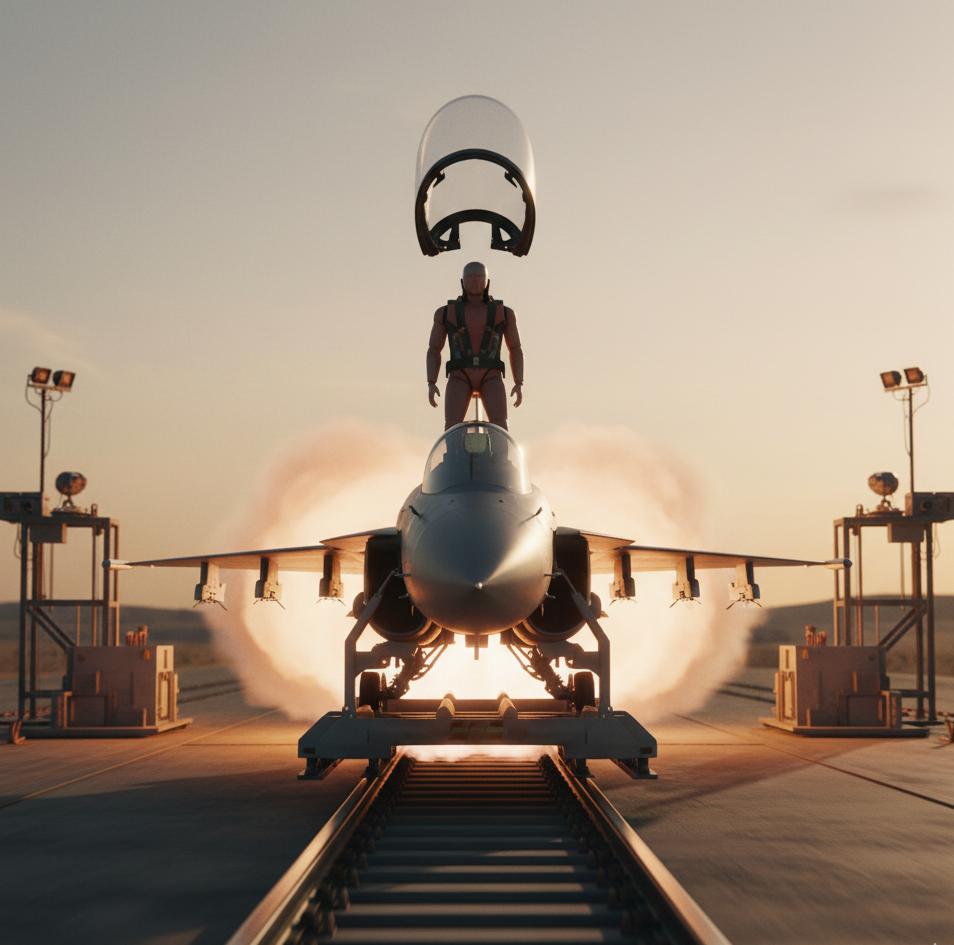
In a massive leap towards defense self-reliance (Aatmanirbharta), the Defence Research and Development Organisation (DRDO) has successfully conducted a complex high-speed rocket-sled test of a fighter aircraft escape system. Defence Minister Rajnath Singh hailed the achievement as a “self-reliance milestone,” placing India in an elite club of nations capable of performing such advanced dynamic safety evaluations.
This isn’t just a technical win; it’s a strategic guarantee that India’s indigenous fighter pilots will have access to world-class safety and escape technology, completely designed and validated in India.
🚀 What Was Tested? The Pilot’s Last Line of Defence
The test focused on the crew escape system—the pilot’s lifeline in a catastrophic airborne emergency. This system is not just the ejection seat itself, but a highly synchronized chain of events that must occur perfectly within milliseconds.
The DRDO test, conducted in collaboration with the Aeronautical Development Agency (ADA) and Hindustan Aeronautics Limited (HAL), validated three crucial elements under extreme high-speed conditions:
- Canopy Severance: The mechanism that blasts the fighter jet’s canopy clear of the pilot’s path.
- Ejection Sequencing: The precise timing of the rocket firing to propel the seat and pilot (represented by an instrumented dummy) safely away from the fast-moving aircraft.
- Aircrew Recovery: The full sequence leading to the deployment of the parachute for a safe descent.
🚄 Why a “Rocket-Sled” is Critical: The Dynamic Advantage
The test took place at the Rail Track Rocket Sled (RTRS) facility of the Terminal Ballistics Research Laboratory (TBRL) in Chandigarh. Unlike static tests (like the common ‘Zero-Zero’ test), which simulate ejection from a stationary aircraft, the rocket-sled test simulates real-world flight dynamics.
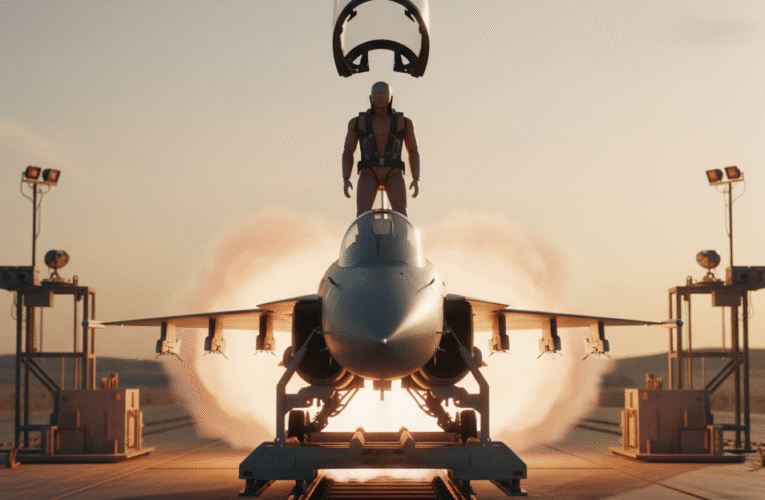
For this trial, a dual-sled system carrying the forebody of the LCA Tejas was propelled to a precisely controlled 800 km/h by firing multiple solid propellant rocket motors.
- Simulating Reality: A real-world ejection, especially at high speeds, involves massive aerodynamic loads and forces. The RTRS facility allows engineers to replicate these conditions on the ground with precise instrumentation.
- Data Accuracy: An instrumented Anthropomorphic Test Dummy (ATD) recorded the critical loads, moments, and accelerations that a pilot would experience, ensuring the system is safe and effective under extreme stress.
This complex, dynamic validation capability is what separates India from most other nations, underscoring the sophistication of the TBRL facility.
🇮🇳 A Giant Leap for ‘Aatmanirbhar Bharat’ in Defence
This successful high-speed dynamic test is a towering achievement for India’s self-reliance mandate for several reasons:
- Indigenous Confidence: It validates India’s ability to design, develop, and rigorously test critical aviation safety components in-house, significantly reducing dependence on expensive foreign suppliers.
- Tailored Solutions: It allows the escape system to be perfectly integrated and optimized for India’s indigenous fighter fleet, including the LCA Tejas and future combat platforms.
- Certifications: The successful test was witnessed by officials from the Indian Air Force (IAF), the Institute of Aerospace Medicine, and certification agencies, paving the way for the system’s eventual operational deployment.
Defence Minister Rajnath Singh’s praise confirms the government’s recognition of the DRDO, IAF, ADA, HAL, and industry partners who made this technological marvel possible. It reinforces the message that India is committed to becoming a self-sufficient superpower in aerospace technology.
⭐ What This Means Next
The successful rocket-sled test marks a crucial qualification stage for the crew escape system. The data gathered will be used for further refinements and integration into India’s indigenous fighter jets.
For the Indian defence industry, this is proof that local innovation can meet the highest global standards for safety and performance. This milestone is not just about a pilot’s escape; it’s about India’s escape from reliance on foreign defense technology.